

India’s logistics sector is going through a big transformation lately. With e-commerce ramping up, and also manufacturing, warehousing, transportation, and lots of infrastructure development, the pressure for faster, smarter, and more efficient logistics operations is basically at an all-time high. Businesses keep hunting for ways to tune their supply chains, cut down on operational delays, and strengthen accuracy at every step along the movement of goods.
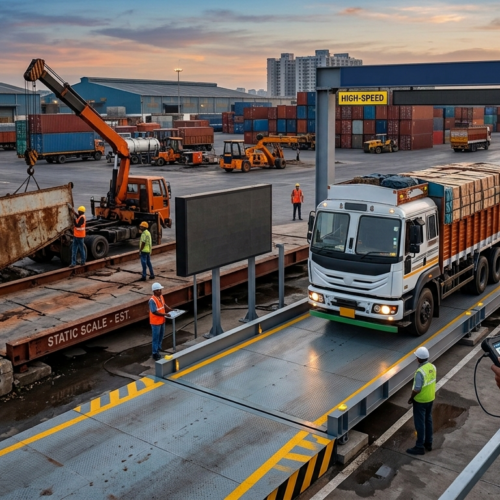
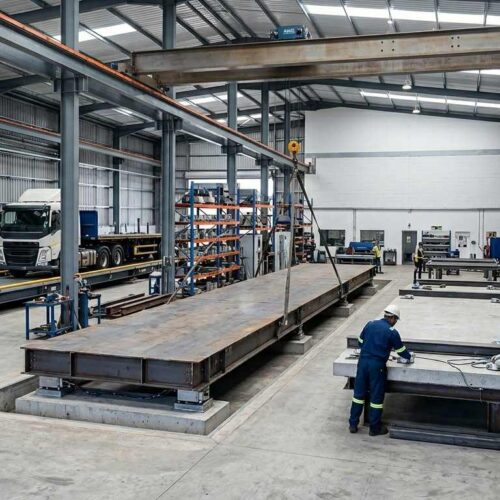
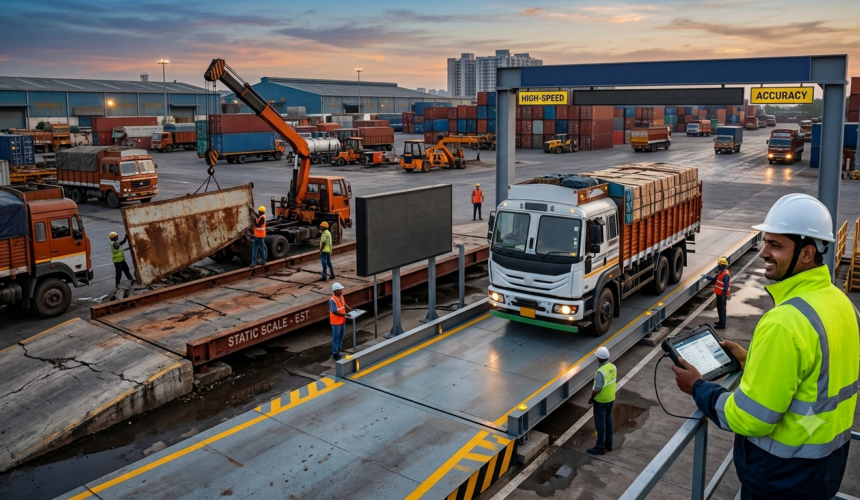
One part where you can see the tech shift pretty clearly is vehicle weighing. Earlier static weighing systems, which used to be the quiet backbone of logistics, are now getting swapped out by upgraded digital solutions from a next-generation weighbridge manufacturer. Modern weighbridges are not only weighing platforms anymore. They’ve become sort of intelligent units, able to share real-time data, support automation, and fit smoothly with logistics management software without that extra headache.
So as India’s major logistics players push for higher efficiency and more transparency, the transition from fixed scales to next-gen weighbridges is turning into a strategic must, not just a nice extra upgrade.
The Limitations of Traditional Static Scales
Static scales have been used for decades as the main tool for measuring vehicle weights. But as logistics has grown more diverse and handling of higher volumes, the drawbacks of conventional weighing systems have become quite evident.
Among other things, these traditional scales are
- Prone to errors due to manual data entry
- Causing longer queues of waiting vehicles
- Featuring only basic reporting functions
- Making it hard to reduce the number of operating staff
- Incompatible with enterprise software integration
- Unable to support remote operation monitoring
- Giving more opportunities for weight tampering and fraud
In places where logistics is carried out on a large scale, with hundreds or thousands of vehicles coming and going on a daily basis, the limitations of such scales can lead to serious loss of productivity and profits.
The Rise of Next-Generation Weighbridge Technology
Earlier, the weighbridge was just a tool for weight measurement. But now the hardware, software, autonomy, and connectivity have been integrated to come up with a complete vehicle management solution.
The goal of a progressive Weighbridge Company is to implement fully automated weighing systems with minimal human intervention, which will provide a reliable and compliant measuring system.
Some of the features of these technological weighbridges include the following:
- Automatic vehicle recognition
- Implementing RFID technology
- Use of CCTV
- Identification of number plates
- Cloud accessible reports
- Remote vehicle control
- Live data
- Incorporation of ERP and logistics software
This modern technology not only enables the logistics firms to gather weight information but also makes them capable of extracting meaningful data from such information.
Why Logistics Giants Are Making the Switch
The truth is time is one of the most important commodities in logistics.
Conventional weighing instruments create a blockage in the flow of traffic since vehicles have to halt, wait for the human operator, and be manually recorded.
Some of the advantages of modern weighbridges are as follows:
- Quicker vehicle turnaround
- Less traffic congestion
- Better fleet flow control
- Optimal use of transport assets
Processing hundreds of trucks day after day, a couple of minutes saved per vehicle can really make a major difference in the overall operation.
2. Enhanced Accuracy and Compliance
Accurate weight measurement is a must for meeting regulatory requirements and ensuring smooth operations.
Overloading of vehicles may cause:
- Risk to safety
- Damage to vehicle
- Legal charges
- Higher fuel usage
Next-generation weighbridges rely on state-of-the-art load cell technology and digital sensors for delivering exceptionally accurate results.
The automated recording system also removes manual errors, thus enabling companies to maintain full compliance with transportation laws and regulations.
Nowadays, logistics is largely dependent on decision-making based on data.
Whereas traditional scales give a very narrow scope of information, modern weighbridge systems produce detailed reports and analytics.
Companies are able to track:
- Vehicles movement patterns
- Loading performance
- Dispatch timing
- Weights recorded over time
- Operational hurdles
Having access to such data helps the top management make well-thought-out decisions and raise the level of supply chain performance.
Converting to technologically advanced weighbridge systems will entail an upfront financial outlay.
The good news is the accrual of cost benefits over time is very significant.
Through the use of such systems, enterprises can minimize their expenditure on the following:
- Handwork
- Mistakes in paperwork
- Vehicles that are on stand-by
- Violations of rules
- Inefficient maintenance
Use of automated solutions enables a business to manage increased traffic volumes without majorly increasing their workforce needs.
This leads to better profit-making and stronger decision control over operations.
Supporting Sustainability Goals
In the context of environmental responsibility, sustainability is gaining momentum among logistics companies all over India.
Properly functioning weighbridge systems help to achieve environmentally friendly objectives in a number of ways.
They facilitate:
- Shortening time of vehicle idling
- Saving of fuel
- Digitization and reduction of paperwork
- Better planning of routes
- Less loading and thus less emission due to overloading
By efficiently organizing the logistics activities, companies stand a chance to not only reduce the carbon footprint but also enhance the operational performance.
With the ever-changing environmental regulations, the importance of sustainable logistics practices is set to increase for ensuring long-term business success.
Security and Transparency Advantages
Security issues such as fraud and unauthorized vehicle movements pose a huge risk of financial loss in the logistics business.
Modern weighbridge technologies bring in security features at many levels, including
- Video Surveillance
- Identification through RFID
- Keeping records automatically
- Maintaining digital trail for audits
- Storage of data in the cloud
Every step taken is fully documented and can be checked later, which contributes to transparent operations.
Conclusion
The logistics sector in India is changing at a surprising pace, and those old static weigh scales are not really enough anymore for today’s operational needs. Logistics leaders are slowly moving toward next-generation weighbridge manufacturers, the ones that bring intelligent automation and data-based insights so they can raise efficiency, improve precision, support compliance, and add real transparency
If you look closer, the impact is everywhere. Like cutting vehicle turnaround durations and operational expenses, while also helping connect easily with digital supply chain workflows. Modern weighbridges end up becoming a core part of smart logistics infrastructure, not just a “weighing spot” in a yard. And as companies keep pushing automation, sustainability, and live operational visibility, putting money into better weighing platforms, or advanced weighing solutions as people phrase it, is turning out to be a pretty strategic decision for lasting growth